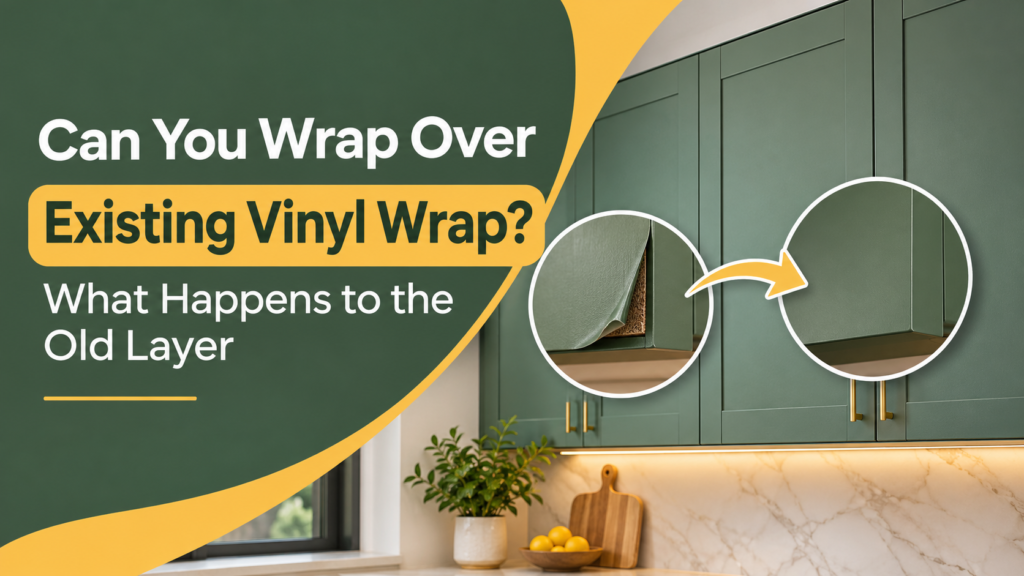
Your kitchen wrap is tired. The corners are lifting, the colour has gone dull, and you are ready for something fresh. Then a tempting thought pops up. Why not just put a new wrap straight over the old one and skip the hard part?
It is a fair question, and the honest answer is "sometimes, but it is risky." In this guide, we explain when it can work and when it almost never does. You will also learn what really happens to the old layer underneath, how to check your own wrap, and what to do if it needs to come off. The same ideas apply to kitchens, wardrobes, furniture, doors, bathrooms and walls, so you can use this guide for any wrapped surface. We keep it simple and friendly, so you can decide with confidence.
1. Short Answer: Can You Wrap Over Existing Vinyl Wrap?
Yes, you can wrap over existing vinyl wrap in some cases. But it only works when the old wrap is smooth, firmly stuck and in very good condition. In most kitchens, removing the old layer first gives a better and longer-lasting result.
The reason is simple. A new wrap is only as strong as whatever it sticks to. If the old layer is weak, the new one will fail with it. Think of it as building on a floor. If the floor is solid, you can build on it. If it is shaky, everything above it will wobble. To see how a full job normally works, this overview of kitchen wrapping in Dubai explains the usual steps from start to finish.
2. Why So Many People Ask This Question
Most people ask because removal sounds like a headache. Let's look at the common reasons behind the question.
a. Removal Sounds Messy and Slow
Peeling old film can take time, and it can leave sticky residue behind. It is natural to wonder if you can avoid all that. Saving effort is a good goal. But it only makes sense if the shortcut does not cost you the result.
b. The Old Wrap Looks "Mostly Fine"
Sometimes only the colour is outdated. The film still looks smooth and tight, so it feels wasteful to take it off. That is the situation where wrapping over has the best chance. We will cover exactly how to judge it later.
c. Fear of Damaging the Cabinets
Some people worry that peeling the old film will pull the surface off the board. That fear is not silly. It can happen, and we explain why further down. Still, a damaged board is a problem you want to know about before you cover it up.
d. Wanting a Quick Colour Change
A change of colour feels like it should be simple. After all, the old wrap is already on. But colour is where wrapping over often shows its weak points, as you will see in section 9.
3. How Vinyl Wrap Layers Work
To understand the risks, it helps to picture what is on your cabinet door. There are more layers than most people think.
a. The Board and Its Surface
At the bottom is the board, often MDF or particle board. It usually has a laminate, melamine or paint surface on top. This is the base that every wrap depends on.
b. The Old Adhesive and Old Film
Above that sits the adhesive of your old wrap, then the film itself. Over the years, heat and steam slowly change both of them. The adhesive can soften, dry out or lose its grip in places.
c. The New Adhesive and New Film
If you wrap over, the new adhesive bonds to the old film. Then the new film sits on top. You now have a chain of bonds. The new film grips the old film, and the old film grips the board. The chain is only as strong as its weakest link.
d. Why Dubai Conditions Matter
Dubai is hard on adhesive. Summer heat, strong sun through windows and humid air all test a bond. A wrap that would last happily in a cooler place can struggle here. Two layers put even more pressure on the weakest point, so the standards for wrapping over are stricter in the UAE.
4. When Wrapping Over Old Vinyl Can Work
There are a few situations where it is reasonable. All of them depend on the old wrap being in great shape. This is also where choosing the right film matters, and the same ideas apply to residential vinyl wrapping on doors, wardrobes and furniture.
a. The Old Wrap Is Smooth and Firmly Bonded
If you press along the surface and nothing moves, that is a good sign. There should be no bubbles, no soft spots and no loose areas. The film should feel like part of the door, not like a sticker on top of it.
b. Edges and Corners Are Fully Sealed
Edges are where most wraps start to fail. If every edge and corner is flat and tight, the old wrap has stayed healthy. Even one small lifted corner can spread under a new layer.
c. The Surface Has No Strong Texture
Smooth finishes make the best base. A flat or gently glossy old wrap gives the new film an even surface. Heavy texture, like deep wood grain, tends to show through the new layer.
d. The New Film Is Not Much Lighter Than the Old One
Going from a similar shade to another works better than a big jump. A dark old wrap under a pale new one can cause trouble. We explain why in section 9.
5. When You Should Not Wrap Over the Old Layer
In many kitchens, wrapping over is a bad idea. Here are the clear red flags.
a. The Old Wrap Is Lifting or Peeling
Lifted edges mean the adhesive is already failing. Covering them only hides the problem for a short time. The new film will lift in the same places, often sooner.
b. There Are Bubbles or Soft Spots
Bubbles can point to trapped moisture or a swollen board. If that is the cause, no new film will fix it. This is closely linked to water-damaged cabinet doors, where the real repair must happen before any wrap goes on.
c. The Film Is Cracked, Brittle or Shrinking
Old, low-grade film can shrink and crack at the corners. That leaves gaps and uneven edges. A new layer would follow every ridge and crack underneath.
d. The Surface Is Greasy or Sticky
Grease near the hob creates a sticky layer that adhesive cannot grip. Even careful cleaning may not fully fix it on old film. This is common around cooker areas in busy Dubai kitchens.
e. You Are Not Sure What Is Underneath
If you do not know how old the wrap is or how it was installed, be careful. Unknown history means unknown risks. Removing the film lets you see the real condition of the board.
f. Old Repairs and Patches
Some wraps have been patched over the years. A repaired door might have a newer piece next to an older one. Those joins are weak spots. Under a new layer, a patch can lift or show as a faint line, so any previous repair is a good reason to remove the old film.
6. What Actually Happens to the Old Layer Underneath
This is the part most people never think about. The old wrap does not simply disappear under the new one. It keeps ageing, and it keeps affecting the new layer.
a. The Old Layer Becomes the New Base
Your new film now depends on the old film for grip. If the old film lets go of the board, it takes the new film with it. So the new wrap can only last as long as the old bond lasts.
b. Heat Keeps Working on Two Layers
Dubai's summer heat and kitchen heat soften adhesive. With two layers, there are two adhesives to soften and two films that expand and contract. That doubles the stress at the edges. Over several years, small movements add up to lifting.
c. Imperfections Show Through
New film is thin. It follows the shape beneath it. Small bumps, bubbles, scratches and old seam lines can all show through, especially on glossy finishes. Matte film hides some of this, but not all.
d. Edges Get Thicker
Two layers make the edges a little thicker. On some doors, that can affect how they sit and close. Tight-fitting doors and drawers are the most likely to feel it.
e. Removing Later Gets Harder
When it is time to take it all off, you now have two films and two adhesives to remove. That is slower, and it can leave more residue. Old layers that have baked in the heat can also come off in small pieces. For a closer look at how wraps wear over time, see how a kitchen wrap ages after 2, 5 and 7 years.
Not Sure What Is Under Your Wrap?
Our team can look at your kitchen and tell you honestly whether the old layer can stay or should come off.
Ask Wrapstar for a Check7. How to Check Your Old Wrap Before You Decide
You do not need special tools to get a rough idea. A simple home check can tell you a lot. Do it in good light, door by door.
a. The Five-Minute Home Test
- Wipe the door clean and dry.
- Run your hand slowly over the whole surface and feel for bubbles or loose areas.
- Look closely at every edge and corner for lifting.
- Press along the edges with a fingertip and see if anything moves.
- Look at the door from a low angle under a light to spot waves or ridges.
b. Check the Worst Doors First
Start with the doors beside the cooker, dishwasher and sink. These take the most punishment. If they are in good shape, the rest of the kitchen is probably healthier. If they are failing, that is a strong warning for the whole job.
c. Note the Age of the Wrap
Older wrap is more likely to be brittle or weak. A wrap that is only a year or two old and well installed has better odds. A wrap that has lived through many summers needs a much closer look.
d. Be Honest About What You See
It is tempting to say "it is probably fine." But small flaws grow under a new layer. If you notice several warning signs, treat the old layer as a problem, not a base.
e. Take Photos and Make Notes
Photograph each door before you decide. Take close shots of corners, edges and any marks. Notes and photos help you compare doors, and they help a professional give clearer advice if you ask for a second opinion.
8. How the Old Wrap Is Removed the Right Way
If the old layer has to go, do not worry. Careful removal is normal work, and it is not as scary as it sounds. Here is how it usually goes.
a. Gentle Heat Softens the Adhesive
A little warmth makes old adhesive let go more easily. Heat is applied slowly and evenly. Too much heat can damage the board surface or burn the film, so control matters more than speed.
b. Peeling Is Slow and Low
The film is pulled back at a low angle, not straight up. This keeps the adhesive on the film and helps protect the board. Rushing causes tearing and leaves more residue behind.
c. Stubborn Spots Get Extra Time
Corners, edges and old greasy areas often resist. These spots may need more warmth and patience. Cutting corners here is what causes most damage.
d. DIY or Professional?
Small jobs can be done at home, but kitchens have many doors and many tricky edges. If you are curious about trying it yourself, read whether you can apply vinyl wrap by yourself before you start. Removal and re-application are very similar in skill.
e. How Long Removal Takes
Removal takes longer than most people expect. A full kitchen has many doors, drawers and panels, and each one needs time. Tight corners and old, baked-on film slow it down further. Planning for a slow, careful job is better than hoping for a quick one.
9. Colour and Texture: Why the Old Wrap Can Show Through
Colour is one of the biggest traps in wrapping over. Many people are surprised by how much the old layer can affect the new look.
a. Dark Under Light
Pale new films can look slightly shadowed over a dark old wrap. Thin or lighter films are the most affected. The result can look dull or uneven, and it may change under strong light.
b. Bold Patterns Under Plain Colours
Strong wood grain or marble patterns can show faintly through a plain new film. Gloss makes it worse. You may only notice it in certain light, which makes it even more annoying.
c. Textured Finishes Telegraph Through
Heavy texture on the old wrap can "telegraph" through a smooth new layer. You may see the pattern as a faint ripple. Smooth over smooth gives the cleanest result.
d. Gloss Shows Everything
High-gloss films act like a mirror. They highlight every small bump and dent beneath them. If you want gloss, a clean base matters even more.
10. Dealing With Adhesive Residue After Removal
Even good removal can leave some sticky film on the board. That is normal, and it can be cleaned if done carefully.
a. Why Residue Happens
Heat and age make adhesive cling to the board. Cheaper films tend to leave more. Older films can break apart and leave patches.
b. Safe Cleaning Basics
A gentle adhesive remover and a soft cloth are the usual approach. Always test on a hidden spot first, such as the inside of a door. Harsh solvents can damage laminate or paint, so go easy.
c. The Surface Must Be Clean and Dry
Any leftover residue or moisture will weaken the new wrap. The surface should feel smooth and dry before anything goes on. This step takes time, but it protects everything that follows.
d. What to Avoid When Cleaning
Do not use strong solvents without testing them first. They can cloud laminate or lift paint. Avoid rough pads that leave scratches. Do not soak the board with water either, because MDF swells when it gets wet. Gentle products and patience protect the base.
11. What Is Underneath Matters: Board and Surface Types
The base under your wrap affects both removal and re-wrapping. Different surfaces behave differently.
a. Laminate and Melamine
These surfaces are usually tough and handle removal well. Strong, well-bonded laminate rarely lifts. Chipped or damaged laminate needs repair first.
b. Painted Surfaces
Paint can peel off with the film if it was never firmly bonded. This is more likely on older or cheaply painted doors. A quick test on a hidden area can tell you a lot.
c. Raw or Damaged MDF
Exposed or swollen MDF needs repair before any wrapping. Wrap cannot fix a weak board. It only covers it for a while.
d. Worktops and Other Horizontal Surfaces
Surfaces that take heat and water are harder on any film. This is why kitchen countertop wrapping needs extra care and a very clean base. Layering a new wrap over an old, worn worktop wrap is rarely a good idea.
12. Wrapping Over Old Vinyl on Other Surfaces
Everything above applies to more than kitchens. Vinyl wrap is used on furniture, wardrobes, doors, bathrooms and walls, and the old-layer question comes up on all of them. Each surface has its own quirks.
a. Furniture
Tables, sideboards and cabinets get touched, bumped and moved. Small dents and scuffs in the old wrap show through a new one. Wrapping over works best on gently used pieces with a smooth old layer. If you are planning a refresh, this guide to furniture wrapping shows what the service covers.
b. Wardrobes
Wardrobe doors are large, flat and very visible. Any bubble or ridge under a new layer stands out. Sliding doors and tight frames also make extra thickness a problem. A clean base is usually the smarter choice for wardrobe wrapping.
c. Doors
Interior doors face constant handling around the handle and edges. Two layers can make a door rub against its frame. That is why door wrapping often goes better when the old film is removed first.
d. Bathrooms
Bathrooms are the toughest test because of steam and splashes. Moisture can sneak under old film and sit there. Wrapping over a damp or weak layer is a high risk. If you are planning bathroom wrapping, a dry and sound base matters even more than in the kitchen.
e. Walls
Large wall surfaces show every wave and bubble. Old seam lines can show through new film in strong light. For wall wrapping, the smoothness of the base is everything.
13. When Removal Goes Wrong: Common Problems
Removal can go wrong, usually because it was rushed. Knowing the risks helps you avoid them.
a. Laminate or Paint Lifts With the Film
If the surface was weak, it may peel with the film. This does not mean you did something wrong. It means the board needed attention before the first wrap, or the film was bonded too hard for the surface.
b. Heat Damage
Too much heat can bubble or discolour the board surface. It can also warp thin parts. Slow, even warmth keeps things safe.
c. Torn Film and Messy Residue
Brittle film tears into small pieces. That takes longer and leaves more adhesive behind. Patience and the right technique make this far easier.
d. Scratches From Tools
Metal tools can scratch the board. Plastic tools are safer for lifting and scraping. A scratch under a new wrap can sometimes show through as a mark.
Want the Old Wrap Handled Safely?
See how Wrapstar prepares kitchen surfaces in Dubai, from careful removal to a clean, ready base for a new finish.
View Kitchen Wrapping Service14. Edges, Corners, Handles and Hinges
Details decide whether a wrap lasts. This is where wrapping over an old layer causes the most trouble.
a. Edges Take the Biggest Hit
Edges are where heat, steam and handling meet. With two layers, they are thicker and more likely to lift. A clean wrap onto a bare edge grips far better.
b. Hinges and Handles
These areas move and get touched every day. Loose hardware stresses the film around it. Good results often mean taking hardware off and wrapping properly behind it. This is a core part of quality kitchen cabinet wrapping.
c. Door Fit After Wrapping
Extra thickness can make doors rub against frames. This is most noticeable on tight, modern kitchens. Checking fit after wrapping is a good habit.
d. Wrapping Into Grooves and Profiles
Grooves and shaped doors are harder with two layers. The film cannot sit as deeply. It may bridge gaps and lift later. Clean surfaces let the film follow the shape properly.
15. Offices and Hotels: Why Commercial Spaces Are Different
Homes and commercial spaces face very different wear. Businesses need a finish that looks sharp every day, often for many guests or clients.
a. Offices
Office desks, reception counters and storage units get heavy daily use. Fast refreshes matter, but so does durability. Wrapping over an old layer may save time, but worn edges are common on busy furniture. A clean base is usually safer for office wrapping in Dubai.
b. Hotels
Hotel rooms are used by many guests and need to look perfect all the time. Small flaws under a new wrap can become obvious across dozens of rooms. For hotel wrapping in Dubai, consistency and long life are far more important than a quick shortcut.
c. Why Downtime Changes the Decision
Commercial spaces often have limited time for work. That can make wrapping over tempting. But a failed layer means a second shutdown. A careful first job usually costs less time overall.
16. Wrapping Over vs Removing First: A Quick Comparison
| Question | Wrapping over the old layer | Removing the old layer first |
|---|---|---|
| Best condition needed | Old wrap must be near perfect | Any condition |
| Risk of lifting later | Higher, because the base can fail | Lower, with proper prep |
| Colour accuracy | Old colour can show through | True colour on a clean base |
| Texture and bumps | May show through | Smooth, even result |
| Edge thickness | Thicker, may affect fit | Normal thickness |
| Future removal | Harder, two layers | Easier, one layer |
| Time now | Faster upfront | Slower upfront |
As you can see, wrapping over wins only on speed today. Removing usually wins on almost everything else.
17. What a Professional Re-Wrap Looks Like Step by Step
It helps to know what good work looks like. Here is the usual order of a proper re-wrap.
a. Inspection
The installer checks every door, edge and corner. They look for bubbles, lifting and damage. This step decides whether the old film stays or goes.
b. Hardware Removal
Handles, hinges and fittings come off where possible. That allows film to cover edges properly. It also avoids cut lines around hardware that can lift later.
c. Old Film Removal
Heat and careful peeling take the old film away. The work goes slowly to protect the board. Adhesive residue is dealt with afterwards.
d. Deep Cleaning and Repair
The surface is cleaned and dried. Small chips and dents are repaired. This stage decides how smooth the new finish looks.
e. Applying the New Film
The film is laid and squeegeed from the centre outwards. Air is pushed out as the film goes down. Edges and corners get special attention.
f. Final Checks
The installer inspects every surface under good light. Hardware goes back on. Doors are tested for fit and movement.
18. Choosing the Right New Film for a Re-Wrap
The film you pick changes how well a re-wrap holds up. This matters even more if you are covering an old layer.
a. Thickness and Opacity
Thicker, more opaque film hides more of what is underneath. Thin film follows every bump. For a base with any texture, a heavier-grade film is usually the better pick.
b. Air-Release Features
Many quality films have tiny channels that let trapped air escape. That helps avoid bubbles during installation. It is a useful feature on large, flat surfaces.
c. Finish and Colour Choice
Matte and textured films hide small flaws better than gloss. Mid-tone colours are more forgiving than very pale ones. If you are changing from dark to light, always check a sample first.
d. Matching the Film to the Room
A kitchen needs heat and grease resistance. A bathroom needs moisture resistance. A bedroom wardrobe can use something softer. Choosing for the room helps the wrap last.
19. Mistakes to Avoid If You Decide to Wrap Over
If your old wrap passes the checks and you still want to wrap over it, take care. Most problems come from skipping basic steps. The biggest mistake is skipping a deep clean. Grease and dust on the old film stop the new adhesive from gripping. Another is ignoring small lifted edges, because they spread quickly under new film.
People also choose a pale film for a dark base without testing a sample first. Try a small piece in your own light before committing. Rushing the job in hot conditions is another problem, since heat makes film stretch and bubble. Finally, using the cheapest film over an old layer is a gamble. Thin, low-grade film shows every flaw underneath. If you are weighing options, this comparison of wrapping, painting or replacing may help you think about the whole picture.
20. A Simple Way to Decide
If you are still unsure, use a simple rule. The old wrap should pass every single check without exception. If you hesitate on even one, take it off. Wrapping over a nearly perfect layer can be fine. Wrapping over a so-so layer usually ends in a redo.
Also think about how long you want the new wrap to last. If you want five to seven good years, a clean base gives you the best chance. If you only need a short-term refresh, wrapping over a healthy layer may be enough. Film choice matters too, and this guide on choosing vinyl film for door wrapping helps you pick something that suits your surface.
21. What If You Already Wrapped Over and It Is Failing?
Maybe you wrapped over an old layer and now see problems. Do not panic. Many people end up here, and it is fixable.
a. Spot the Early Signs
Look for lifting corners, bubbles that return and ridges that were not there before. These usually show up near the cooker, sink and handles first. The earlier you catch them, the easier the fix.
b. Small Problems Can Be Repaired
A few lifted edges can often be pressed down and sealed. A single bubbled door can sometimes be re-done on its own. Keep an eye on the neighbouring doors, because problems often spread.
c. Widespread Failure Means Starting Over
If many doors are failing, the base layer has probably let go. The honest fix is to remove both layers and start clean. It takes more effort, but patching over a failing stack only delays the problem.
22. Aftercare: Looking After Your New Wrap in the First Weeks
The first few weeks matter most. The adhesive is still settling, and gentle care helps it bond fully.
a. Go Easy for the First Days
Avoid heavy cleaning and strong heat for the first few days. Do not pick at edges or press hard on corners. Let the film settle in without stress.
b. Keep Heat and Moisture Away
Use the extractor fan while cooking, and wipe up spills quickly. Keep kettles and air fryers away from doors. Steam near fresh edges can slow the bond down.
c. Check Everything After Two Weeks
Look over every door and edge after a couple of weeks. Press down any small lifts straight away. Early attention keeps small things from becoming big ones.
Still Unsure Whether to Wrap Over or Remove?
Send us a few photos and tell us what you have. The Wrapstar team will give you straight, practical advice.
Talk to Wrapstar23. Frequently Asked Questions
a. Can you wrap over old vinyl wrap in Dubai's heat?
It is possible, but heat makes it riskier. Two layers of adhesive soften in hot conditions. Only wrap over a very healthy, well-bonded layer.
b. Will the old colour show through the new wrap?
It can, especially with dark colours under pale films. Thin or light film shows the most. Always test a sample first.
c. How many layers of wrap can you have?
There is no magic number, but two is already a lot for a kitchen. More layers mean thicker edges and weaker bonds. Removal also gets harder each time.
d. Do you have to remove old wrap before re-wrapping?
Not always, but it is usually the better choice. Removal gives you a clean base and shows the board's true condition. It also protects the new wrap's life.
e. Can removing old wrap damage my cabinets?
It can if it is rushed, or if the surface was weak. Slow, gentle heat and low-angle peeling protect the board. A hidden test spot is always a smart first step.
f. Can I wrap over old wrap on a countertop?
It is rarely a good idea. Worktops face heat, water and knives. A clean base gives the new wrap its best chance.
g. What if my old wrap is only a year old?
If it is smooth and firmly bonded, wrapping over may work. Check edges and corners carefully first. Choose a film that suits the existing colour.
h. How do I know the old layer is safe to cover?
It should have no bubbles, no lifted edges and no soft spots. It should feel solid under your hand. If you doubt even one door, remove it.
i. Can I wrap over old wrap on a wardrobe or furniture?
Yes, if the old layer is smooth and firmly bonded. Large flat surfaces show flaws easily, so check carefully. Heavily used pieces often do better with a clean base.
j. Is wrapping over old wrap allowed in a rented home?
Check your tenancy agreement and landlord rules first. Adding layers can make later removal harder, which matters if you must restore the original look.
k. Does a thicker film hide the old layer better?
Usually, yes. Thicker, opaque film hides more of the surface below. It cannot fix a weak or lifting base, though.
l. Can I wrap over old wrap in a bathroom?
It is risky. Steam and splashes can get under the old film and weaken both layers. A dry, clean base is the safer choice.
24. Final Thoughts: Build on a Strong Base
So, can you wrap over existing vinyl wrap? Yes, sometimes. But the old layer has to be in excellent shape, and even then there are trade-offs. In most Dubai kitchens, taking the old wrap off first gives a cleaner, tougher and longer-lasting result.
Think of the old layer as the foundation of your new finish. A strong foundation is worth the extra effort. A weak one will show up, usually at the worst time. Take a little time to check, and you will save yourself a lot of frustration later.
Ready for a Fresh, Long-Lasting Finish?
Explore the Wrapstar range of interior wrapping solutions for homes across Dubai, or talk to our team about your kitchen.
Visit Wrapstar