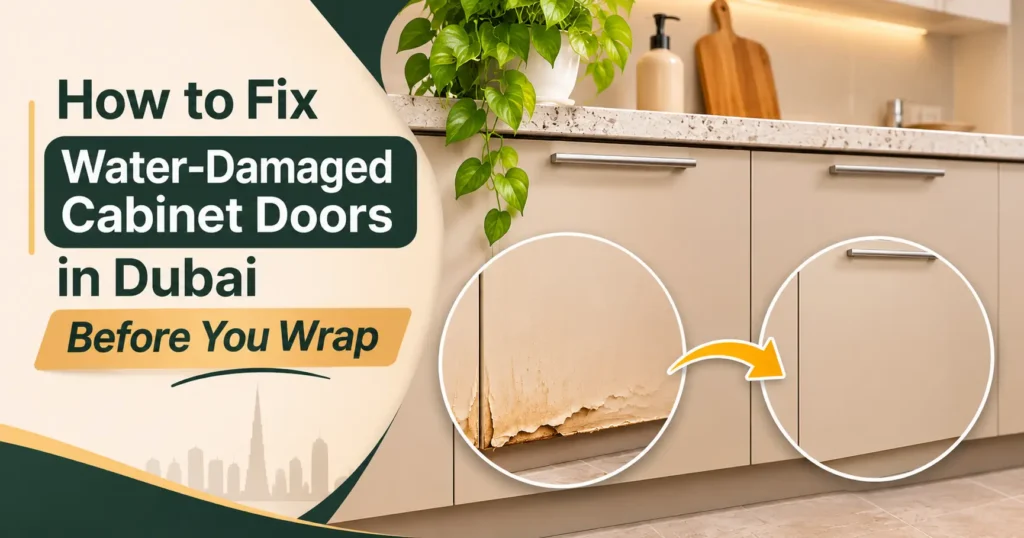
Many Dubai homeowners ask the same thing: can I just wrap over it? The answer is that vinyl wrap can fix how a door looks, but it cannot fix a door that is soft, swollen, or wet inside. The damage must be dealt with first.
In this guide, you will learn how to check the damage, what you can repair, when to replace a door, and how to prepare the surface for a smooth, long-lasting kitchen cabinet wrapping finish.
Quick Answer: Can You Wrap Water-Damaged Cabinet Doors?
Why Cabinet Doors Get Water Damage in Dubai Homes
Most kitchen cabinets are made from MDF or particleboard with a thin outer layer. These boards are strong when dry, but they soak up water if the outer layer is damaged. Once water gets in, the board swells and does not shrink back.
Common causes in Dubai kitchens include:
- Leaks under the sink: Old pipes, loose taps and worn seals.
- Appliance leaks: Dishwasher and washing machine hoses.
- Steam: Cooking with poor extraction can leave moisture on doors.
- High humidity: This is more common in coastal areas and in summer.
- AC condensation: Drain pipes or units that drip near cabinets.
- Daily splashes: Wet cloths and spills left on door edges.
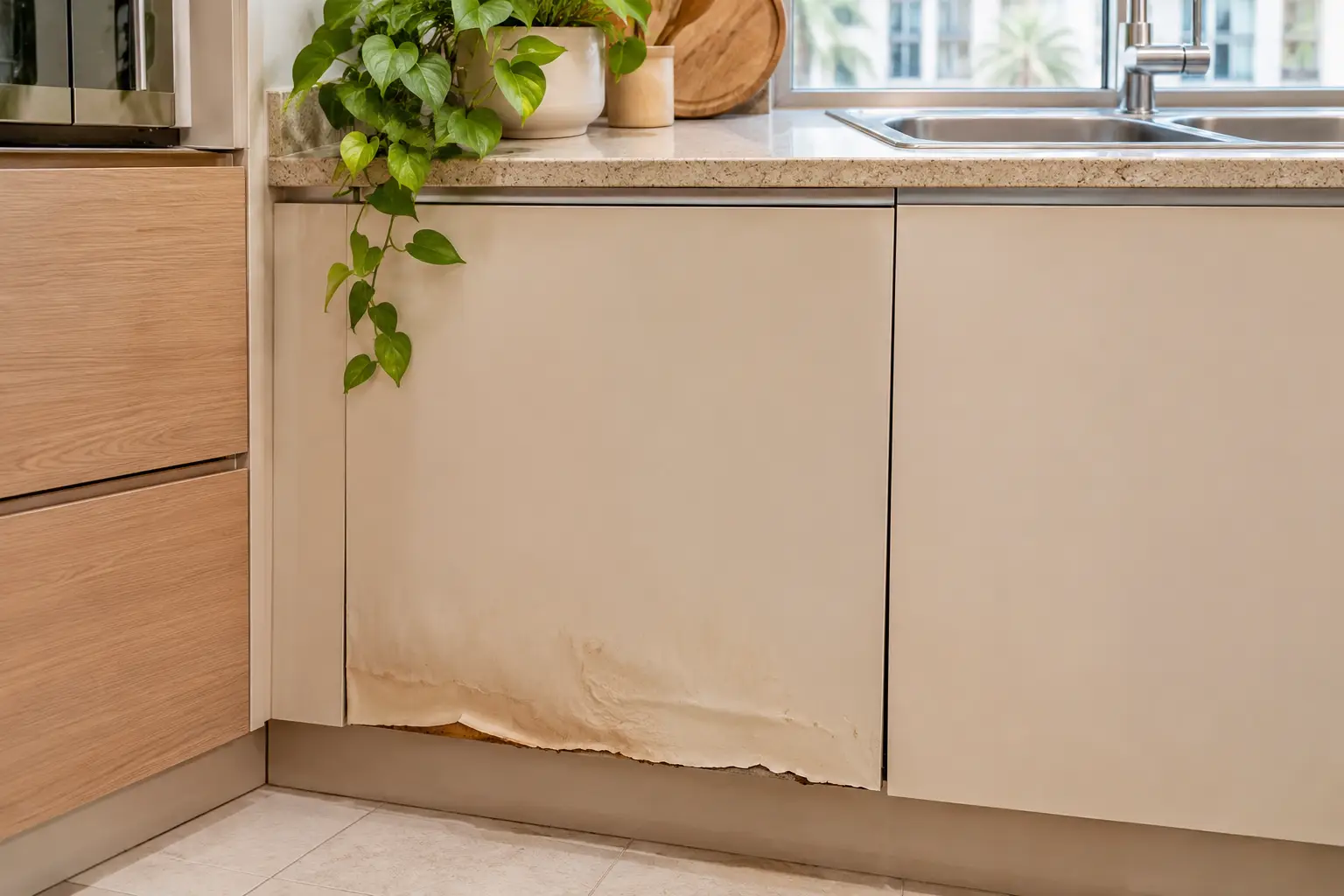
Doors near the sink and dishwasher usually get hit first. The bottom edges are most at risk, because water runs down and sits there.
Types of Water Damage on Cabinet Doors
Look closely before you plan any repair. The type of damage decides what you can fix.
Swollen Edges and Corners
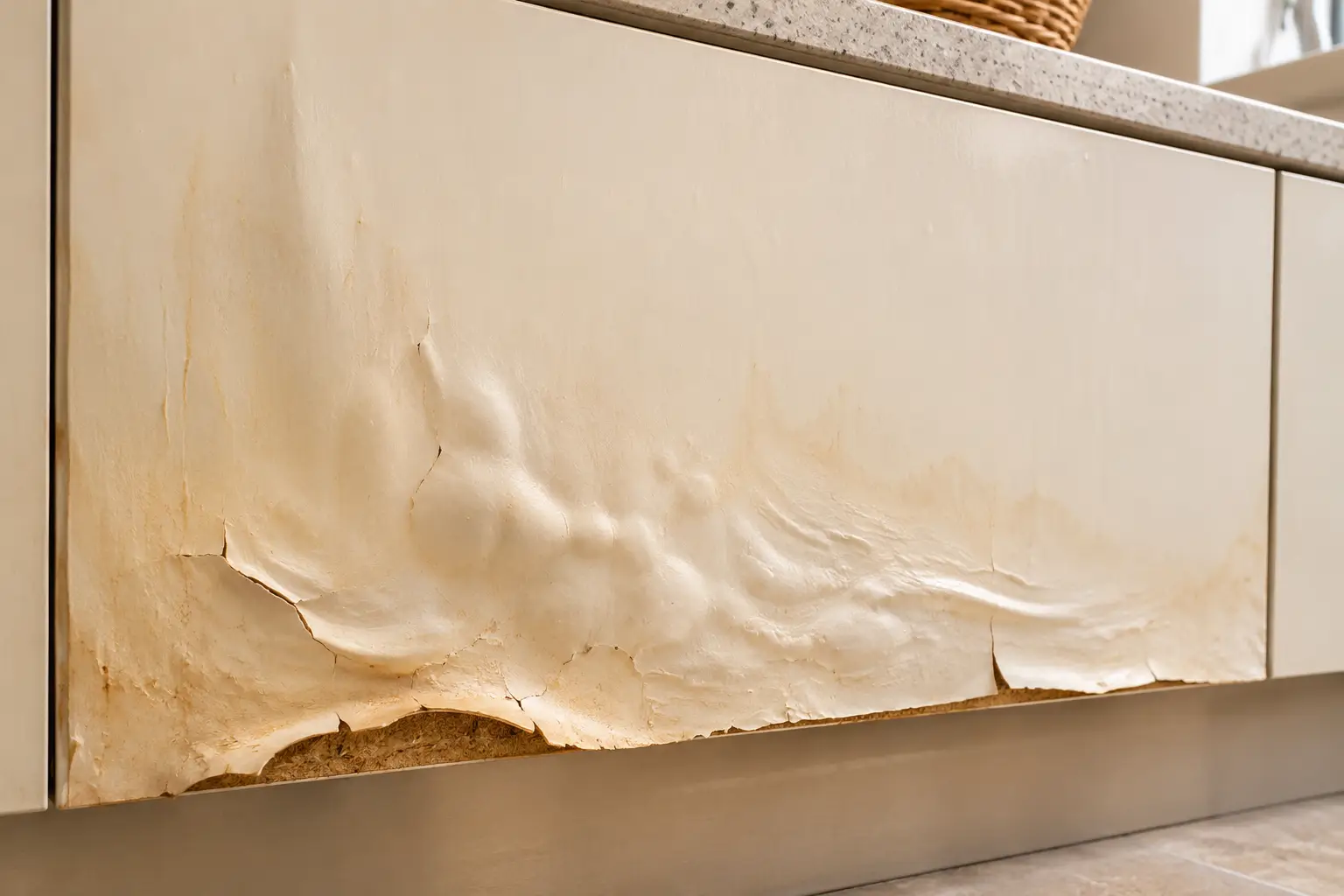
The board puffs up, often at the bottom edge. Light swelling that is still firm can often be sanded and filled. If the board is soft or crumbles when pressed, it is past repair.
Peeling or Bubbling Surface
The outer layer lifts and forms bubbles or curls at the edge. This happens when water breaks down the glue. Loose areas can sometimes be glued back, but large areas may need the layer removed.
Stains and Colour Changes
Dark rings or patches are surface marks. If the board underneath is firm and dry, these are usually not a structural problem. Wrap can cover them once the surface is clean and smooth.
Mould and Mildew
Black or green spots and a damp smell are signs that moisture stayed too long. Mould must be cleaned and the cause fixed before anything is wrapped over it.
Warped Doors
A door that bends or no longer sits flat will not wrap well. The film will follow the bend, and the door may not close properly. Warped doors usually need replacing.
Can Vinyl Wrap Hide Water Damage?
Vinyl wrap hides stains, colour changes and light surface marks well. It does not fix swollen, soft or warped boards. Vinyl is thin, so it follows the shape under it. Every bump or rough patch can show through.
Think of wrap as the finishing layer, not the repair. Here is a quick guide:
| Type of damage | Can it be wrapped? | What to do first |
|---|---|---|
| Surface stains only | Yes | Clean and dry the door. Check that the board is firm. |
| Light edge swelling (board still firm) | Yes, after repair | Sand flush, fill the gaps and seal the edge. |
| Peeling or bubbling surface | Often yes | Glue down loose areas or remove the lifted layer. Fill and sand smooth. |
| Mould or mildew | Yes, after treatment | Clean it, fix the moisture source and dry fully. |
| Soft or crumbling board | No | Replace the door. |
| Warped door | No | Replace the door. |
| Hinge holes that no longer hold | Sometimes | Repair the holes or replace the door. |
How to Fix Water-Damaged Cabinet Doors Before Wrapping
Here is the usual order of repair. If you skip a step, the finish may fail later.
Step 1: Stop the Water Source
Find and fix the leak first. Check pipes, taps, the dishwasher hose and any AC lines nearby. If the cause stays, the damage will return, even under new vinyl.
Step 2: Dry the Doors Fully
Open the doors and drawers and let air move through. A fan or dehumidifier can help. Take the doors off if you can. Wrapping over a damp board can trap moisture and cause bubbles or peeling later. Drying time depends on how wet the board got, so do not rush it.
Step 3: Check How Bad the Damage Is
Press the swollen area with your finger or a flat tool. A firm board can be repaired. A soft, spongy or crumbling board cannot. Also check that the hinge screws still hold tight and that the door sits flat.
Step 4: Clean and Treat Mould
Wear gloves and a mask. Clean the area with mild soapy water or a mould cleaner made for this use, and follow the label. Never mix cleaning products. Dry the surface fully afterwards. If mould covers a large area or keeps coming back, ask a professional to check the cause.
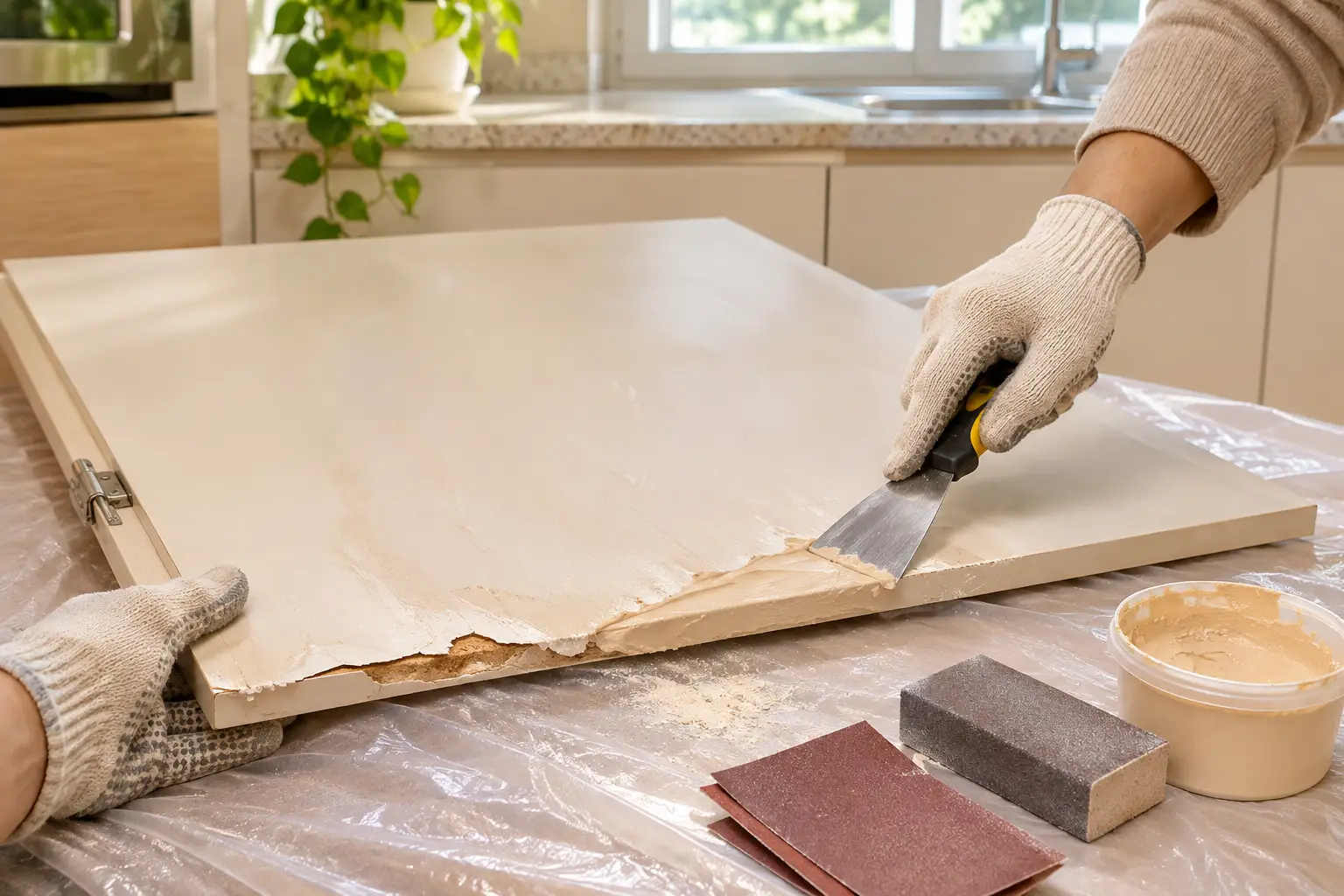
Step 5: Remove Loose Layers and Sand
Cut away or peel off any lifted laminate or film. Then sand swollen edges until they are flush with the rest of the door. Use fine sandpaper and keep the surface even.
Step 6: Fill and Smooth
Fill gaps, dents and rough spots with a wood filler or an epoxy filler made for boards. Let it cure, then sand it smooth. Run your hand over the door. If you can feel a bump, the wrap will show it.
Step 7: Seal the Edges
Seal raw board edges with a suitable sealer or primer so the board is protected from moisture. Sealing the edges, especially at the bottom, helps the repair last longer.
Step 8: Check the Surface Before Wrapping
The door should be clean, dry, smooth, flat, and firm. The hinges should hold. Once it passes this check, it is ready for a professional installer to wrap. A wrapping team can also check your doors on site and tell you which ones are ready and which need extra work.
When to Replace the Door Instead of Repairing It
Some doors are not worth saving. Replace the door if:
- The board is soft, spongy, or crumbling.
- The door is warped and will not sit flat.
- Large areas of the board have swollen.
- The hinge holes are blown out and will not hold screws.
- Mould has gone deep into the board and keeps coming back.
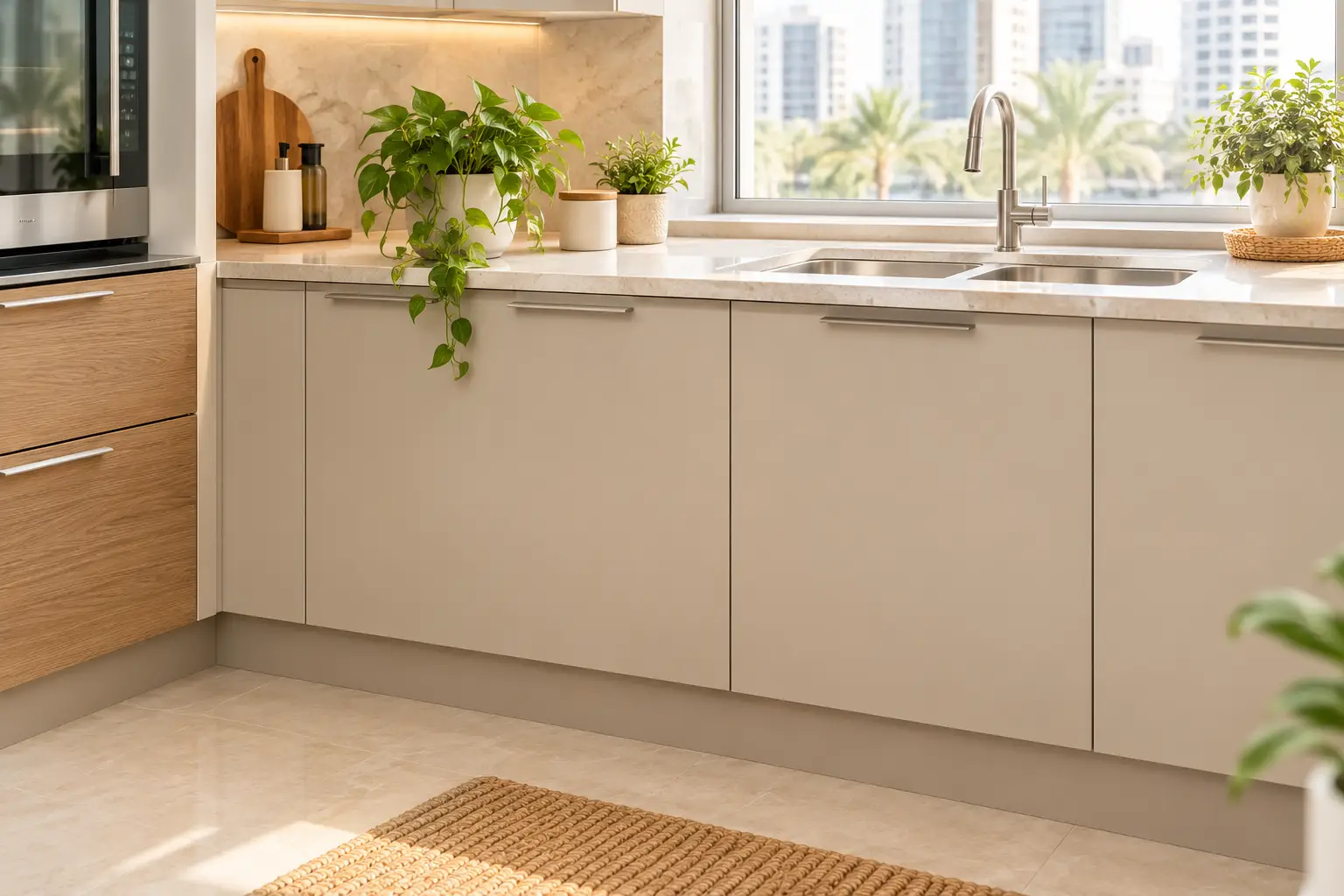
You do not need to replace the whole kitchen. You can often replace only the damaged doors and keep the rest. Then wrap all the doors with the same finish. This gives you a matching look, which is hard to get with mixed old and new doors. If you are weighing your options, this comparison of vinyl wrap vs painting vs replacement can help you decide.
If the cabinet box itself is swollen or weak, especially under the sink, that unit may need replacing too.
Should You Repair It Yourself or Hire a Professional?
Small jobs, such as light edge swelling on one or two doors, can be handled by a careful DIYer. But the finish only looks as good as the surface under it.
Hire a professional if:
- More than a few doors are damaged.
- You see mould or smell damp.
- The hinges no longer hold.
- You want a smooth finish that lasts.
If you rent, ask your landlord before you change anything. Some landlords use vinyl wrapping for rental properties in Dubai to refresh units between tenants.
How to Stop Water Damage from Coming Back
- Fix leaks quickly and check under the sink often.
- Wipe spills and wet cloths off door edges.
- Use your cooker hood or extractor fan when you cook.
- Run the AC or a dehumidifier in humid months.
- Keep bottom edges sealed.
- Protect splash zones with surfaces that wipe clean, such as kitchen countertop wrapping and kitchen backsplash wrapping near the sink.
A wrap adds a protective layer to the door face, but it does not replace a dry, healthy board. Edges and the cause of moisture still need care. Good habits also keep the finish looking new, and these vinyl wrap furniture protection tips explain how.
Water-Damaged Cabinet Doors FAQs
Can you wrap over water-damaged cabinets?
Yes, but only after the damage is repaired and the board is dry and firm. Vinyl hides stains and light surface marks. It cannot fix soft, swollen or warped boards.
Can swollen MDF cabinet doors be repaired?
Light swelling on a firm board can often be sanded and filled. If the board is soft or crumbling, it is better to replace the door.
How long should cabinet doors dry before wrapping?
It depends on how wet they got and the room conditions. The board should feel fully dry and firm. If you are unsure, wait longer, because trapped moisture can cause bubbles and peeling.
Will vinyl wrap stop water damage?
A wrap protects the door face from splashes and makes cleaning easier. It does not stop leaks, and moisture can still enter at raw edges. Fix the cause and seal the edges.
Is it cheaper to repair and wrap or to replace the cabinets?
Repairing and wrapping is often cheaper than a new kitchen when only some doors are damaged. Replacing only the worst doors and wrapping them all is a good balance. For a wider view, see whether vinyl wrapping furniture is cheaper than buying new furniture. A site check gives the clearest cost.
Can you wrap over mould?
No. Mould must be cleaned and the moisture source fixed before wrapping. Wrapping over mould can trap damp, and the problem may come back.
Final Thoughts: Repair First, Then Wrap
Water damage does not always mean a new kitchen. Fix the source, dry the doors, repair what can be saved, and seal the edges. Replace any door that is too far gone, then wrap everything in one finish so the kitchen looks new.
When your doors are ready, pick a look that suits your home. These kitchen wrap colour and finish trends for 2027 are a good place to start.