Imagine walking into your office and noticing that the reception desk looks worn, the cabinets feel outdated and the meeting room no longer matches your brand. The space still works, but it does not create the right impression.
You may think a full renovation is the only way to fix it. But that is not always true.
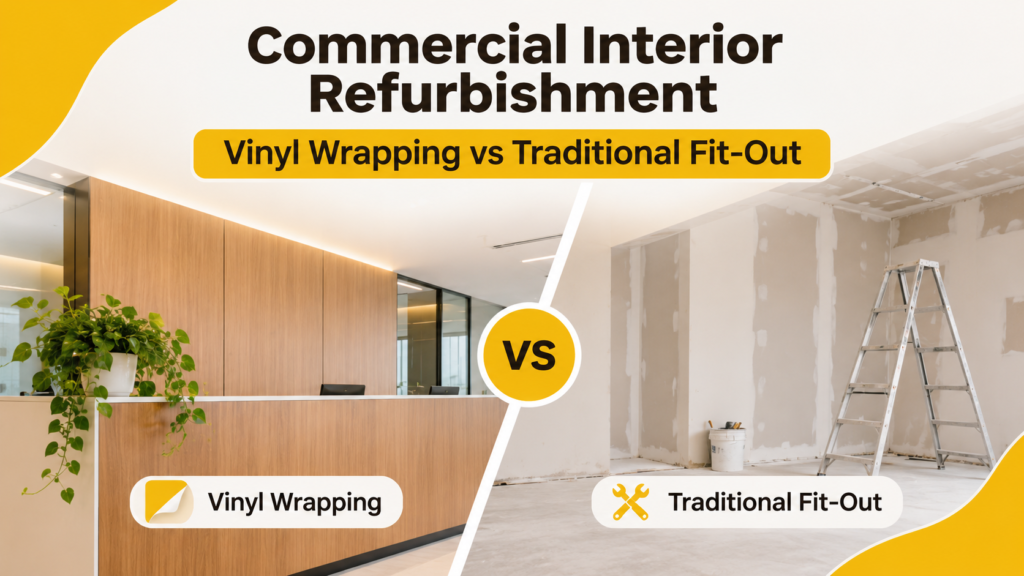
Some commercial interiors can get a fresh look without removing every desk, cabinet or wall panel. Commercial vinyl wrapping offers a way to update suitable existing surfaces with new colours, textures and finishes.
A traditional fit-out takes a different approach. It can replace old materials, change the layout and rebuild parts of the space.
So, which option should your business choose?
In this guide, we compare commercial interior refurbishment through vinyl wrapping and traditional fit-out. We explain the differences in cost, installation time, design, durability and business disruption. You will also learn which option may work best for offices, hotels, retail stores and other commercial spaces in Dubai.
What Is Commercial Interior Refurbishment?
Commercial interior refurbishment means improving an existing business space. The aim is to make the interior look better, work better or match the needs of the business.
It does not always require a complete renovation. Sometimes, the furniture is still strong, the cabinets still work and the layout is already suitable. The main problem may be the old colour, damaged finish or outdated design.
For example, a hotel may have strong wardrobes and cabinets, but their finish may look old. An office may have useful workstations that no longer match its brand colours. A retail store may need a more modern reception counter to improve its customer experience.
In these cases, replacing everything may not be necessary. The business can explore ways to update the existing surfaces.
Commercial refurbishment can include several types of work, such as:
- Updating furniture, cabinets and reception counters.
- Refreshing doors, wall panels and decorative surfaces.
- Improving hotel rooms and shared areas.
- Changing flooring, lighting or ceiling finishes.
- Replacing damaged fixtures and fittings.
- Changing the layout of offices or retail spaces.
The right method depends on what needs to change. This is where the difference between vinyl wrapping and a traditional fit-out becomes important.
What Is Commercial Vinyl Wrapping?
Commercial vinyl wrapping is the process of applying a decorative film to a suitable existing surface. The film changes the appearance of the surface without requiring the whole item to be replaced.
These materials are often called architectural films, interior vinyl films or decorative surface films. They are available in many finishes, including wood, marble, stone, metal, solid colours, matte and gloss.
For example, an old reception counter may still be strong and useful. Instead of removing it, a suitable wood-effect film can give it a warmer and more modern appearance. The same approach may work for office cabinets, doors, desks and selected wall panels.
The result depends on the film, the surface and the quality of installation. Not every material is suitable for wrapping, so the surface should be checked before work begins.
Where Can Commercial Vinyl Wrapping Be Used?
Vinyl wrapping can be used on many suitable surfaces in business interiors.
Office Furniture and Workstations
Desks, cabinets, storage units and meeting room furniture can be refreshed with coordinated finishes. This can help create a more consistent look across the workplace without buying all-new furniture. The process is also useful when the furniture is still strong but its finish looks old.
Reception Counters
The reception area is often the first place customers and visitors see. A worn counter can affect the overall impression of the office. A new finish can help make the entrance look cleaner and more professional.
Hotel Interiors
Suitable wardrobes, doors, cabinets, counters and furniture can be updated to give guest rooms and shared areas a more modern appearance. Hotels can also plan the work in stages to help manage guest access.
Retail Stores
Display units, shelves, counters and selected fixtures can be refreshed to match a new brand style or seasonal design. This can be useful when the existing fixtures are still in good condition.
Restaurants and Cafés
Suitable furniture, counters and decorative panels can be updated to improve the look of dining and customer areas. The film must be selected for the surface and its intended use.
For offices, this type of update can include office vinyl wrapping in Dubai, depending on the furniture and surfaces that need attention.
Not sure if your existing surfaces can be wrapped? Send us a few photos and the Wrap Star team will take a look.
Get a Free Surface CheckWhy Do Businesses Choose Architectural Vinyl Film?
The main benefit of architectural vinyl film is that it can change the appearance of suitable surfaces without replacing the whole item.
This can make it a useful option for businesses that want a visual update but do not need major construction work.
For example, imagine an office with twenty workstations. If the desks are still strong, replacing all of them may create extra cost and waste. Wrapping their suitable surfaces can give the office a new design while keeping the existing furniture.
Other benefits include:
- Less removal work: Suitable furniture and panels can remain in place instead of being removed and replaced.
- More finish choices: Businesses can choose wood, marble, stone, metal, matte, gloss and other decorative effects.
- Targeted improvements: You can update selected areas instead of changing the entire interior.
- Flexible planning: Some projects can be completed in sections to help reduce disruption.
- Better use of existing furniture: Items that are still in good condition may continue to serve their purpose.
However, wrapping is not a repair method for every surface. Loose, broken, badly damaged or unsuitable materials may need repair or replacement first.
What Is a Traditional Commercial Fit-Out?
A traditional commercial fit-out involves building, replacing or changing parts of an interior space. It can be a small project, such as installing new cabinets, or a large project that changes the layout of an entire office.
Unlike vinyl wrapping, a fit-out can change more than the appearance of a surface. It can also improve how a space is used.
For example, a business may need to remove a wall to create a larger meeting room. A hotel may need new bathrooms and plumbing. A retail store may want to move its counters and create a new customer area.
These changes need construction or installation work. Applying decorative film alone cannot provide the same result.
What Does a Traditional Fit-Out Include?
The exact work depends on the property and the business requirements. A commercial fit-out may include removing old fixtures, installing new furniture, changing floors, adding partitions and updating lighting.
It can also involve electrical and plumbing work. For larger projects, contractors may need to coordinate several trades to complete the work safely and correctly.
A traditional fit-out may include:
- Removing old furniture, counters and fixtures.
- Installing new cabinets, workstations and storage.
- Building or removing walls and partitions.
- Changing flooring, ceilings and lighting.
- Updating electrical and plumbing systems.
- Creating new meeting rooms, offices or customer areas.
This makes a fit-out suitable for projects where the existing interior no longer meets the needs of the business.
When Is a Full Fit-Out the Better Choice?
A traditional fit-out may be the better option when the existing space needs major changes.
For example, if a business wants to turn several small rooms into one open office, vinyl wrapping will not change the layout. Construction work will be needed.
The same applies when cabinets are broken, walls are damaged or electrical systems need to be updated. A decorative finish cannot fix these problems.
A full fit-out is worth considering when the project requires structural changes, new installations, major repairs or a completely new interior design.
Commercial Vinyl Wrapping vs Traditional Fit-Out: Key Differences
Both options can improve a commercial interior, but they solve different problems.
Vinyl wrapping focuses on changing the appearance of suitable existing surfaces. Traditional fit-out can replace materials, rebuild fixtures and change how the space is arranged.
| Comparison | Commercial Vinyl Wrapping | Traditional Fit-Out |
|---|---|---|
| Main purpose | Refresh existing surfaces | Build, replace or change interior elements |
| Cost | Often lower for suitable surface updates | Can be higher due to construction and replacement |
| Installation time | Often faster for targeted projects | May take longer due to several stages of work |
| Demolition | Usually not required for wrapping work | May be required |
| Design | Many decorative film finishes | Wide choice of materials and built-in designs |
| Business disruption | Can often be planned in sections | May involve more noise, dust and work areas |
| Layout changes | Does not change the room layout | Can change the layout |
| Furniture replacement | May be avoided if furniture is suitable | May be needed |
| Structural repairs | Not designed for structural repairs | Can include major repairs and changes |
| Best suited for | Updating existing surfaces | Major interior changes |
The table gives a general comparison. Actual cost and installation time depend on the size of the project, the materials and the condition of the existing space.
1. Cost: Which Option Is More Affordable?
Cost is one of the biggest factors when planning commercial interior refurbishment. Businesses need to consider more than the price of the new finish. They also need to think about labour, removal, replacement materials, transport and the time the space may be unavailable.
A traditional fit-out can involve several of these costs at once. For example, replacing an office reception counter may require removing the old counter, disposing of it, buying a new one and arranging installation.
Commercial vinyl wrapping can reduce some of these steps when the existing counter is still suitable. The business keeps the original structure and pays for the film, preparation and installation instead of replacing the entire item.
This does not mean wrapping is always cheaper. A large wrapping project with complex surfaces or special finishes can still require a significant budget. The best way to compare costs is to assess the actual surfaces and project requirements.
Businesses can also compare the cost of vinyl wrapping furniture versus buying new furniture. This can help them decide whether their existing furniture is worth keeping and updating.
What Affects Commercial Vinyl Wrapping Costs?
The price of a commercial vinyl wrapping project depends on the amount of work involved.
Surface Area
Larger surfaces need more film and installation time. Wrapping a few cabinets will usually involve less work than updating an entire office.
Film Type and Finish
Different films have different prices. A simple solid colour may cost differently from a specialist wood, stone or textured finish.
Surface Condition
The surface must be clean, stable and suitable for wrapping. Repairs or extra preparation can increase the total cost.
Shape and Detail
Flat panels are generally simpler to wrap than curved surfaces, corners and detailed furniture.
Project Size
The number of items and the location of the work can affect planning, labour and installation time.
What Affects Traditional Fit-Out Costs?
A traditional fit-out can involve more types of work. The total cost may include design, construction, materials, labour and the removal of existing items.
If the project requires new partitions, ceilings, flooring, lighting or plumbing, these will add to the budget. Large projects may also need several contractors and a longer work schedule.
2. Installation Time: Which Option Is Faster?
Time is important for businesses because renovation work can affect daily operations. An office may need to move staff. A hotel may need to limit access to guest rooms. A retail store may lose customer space while construction is taking place.
Commercial vinyl wrapping can help reduce this disruption when the existing surfaces are suitable. The installer prepares and covers the surfaces instead of removing and rebuilding the entire item.
A traditional fit-out usually has more stages. These may include demolition, material delivery, construction, electrical work, installation and final finishing. If several trades are involved, the work may take longer to coordinate.
A Real Example of Time and Cost Savings
A 3M article describes a hospital refurbishment project where existing cabinets were resurfaced with 3M DI-NOC Architectural Finishes instead of being removed and replaced.
The project reduced the overall room renovation time by three weeks and reported a 75% reduction in overall renovation costs.
These figures relate to that specific hospital project. They should not be treated as guaranteed savings for every office, hotel or commercial property.
However, the example shows how reusing suitable existing surfaces can reduce the work involved in a refurbishment.
How Can Businesses Reduce Downtime?
Planning is just as important as the installation method. Businesses can discuss the work schedule with their installer before the project begins.
For example, an office may arrange to wrap one group of workstations at a time. A hotel may schedule selected rooms when they are not occupied. A retail store may plan work outside its busiest hours.
This approach may help keep other parts of the business running. The exact schedule depends on the number of surfaces, preparation needs and installation conditions.
For a closer look at how this works in an office, office vinyl wrapping in Dubai can be considered for suitable furniture and interior surfaces.
3. Design and Appearance: Which Offers More Choices?
A commercial interior should match the business and create the right experience for customers, guests and staff.
Traditional fit-out gives businesses a wide choice of materials and construction options. It can create new counters, custom furniture, partitions and complete interior layouts.
Architectural vinyl film offers a different way to achieve a new appearance. It can change the look of suitable existing surfaces using decorative finishes.
For example, a business can use a wood-effect finish on reception counters and cabinets. It can also choose a marble-style finish for selected panels or a matte finish for office furniture.
Popular Architectural Film Finishes
Wood Grain
Wood-effect films can give furniture and counters a warm, natural appearance. They are useful when a business wants a classic or welcoming interior without replacing suitable existing items.
Marble and Stone
These finishes can create a clean, premium look on suitable counters, panels and furniture. They may work well in hotel reception areas, salons and selected retail interiors.
Matte and Gloss
Matte finishes offer a softer appearance, while gloss finishes create a brighter, more reflective look. The right choice depends on the design and the amount of daily use.
Metallic Finishes
Metal-effect films can add a modern touch to selected surfaces. They may suit contemporary offices, display areas and feature counters.
Textured Finishes
Textured films add visual detail and can help create a more distinctive interior. They are useful when a plain surface needs more character.
One advantage of using architectural film is that different surfaces can be coordinated. For example, a business may choose matching finishes for its reception counter, cabinets and doors to create a consistent design.
4. Durability and Maintenance
Commercial interiors face regular use. Office desks are used every day, hotel furniture is handled by guests and retail counters come into contact with customers and products.
This means the material must suit the location.
Architectural vinyl films are made for specific interior applications. Some products offer features such as abrasion resistance, but performance varies by film type and intended use. A film suitable for a decorative wall panel may not be the right choice for a heavily used counter.
Traditional fit-out materials also vary. Their durability depends on the material, quality, installation and level of maintenance.
How Can You Protect Wrapped Surfaces?
Good care can help keep wrapped surfaces looking clean.
Use cleaning products that are approved for the selected film. Avoid harsh chemicals and rough scrubbers unless the manufacturer confirms they are safe. Clean spills and marks using the recommended method.
It is also important to protect the film from sharp objects and avoid damaging its edges. If a surface is exposed to frequent contact, choose a product designed for that type of use.
Before installation, ask about the film’s technical details, cleaning instructions and suitability for the location. These vinyl wrap furniture protection tips can also help explain why the right film and proper care matter.
5. Business Disruption During Refurbishment
A renovation can affect more than the room being updated. It can change how staff work, where customers enter and which areas are available.
For hotels, long periods of work may affect guest rooms and shared spaces. For offices, moving desks and equipment can interrupt normal work. For retail stores, blocked counters or display areas can affect the customer experience.
Commercial vinyl wrapping can be useful when a business wants to update selected surfaces without carrying out major construction. Work may be planned in sections, depending on the project.
For example, an office can update its reception counter first and schedule workstations later. A hotel can refresh selected rooms in stages. A shop can update display units outside busy trading hours.
A traditional fit-out may require more space for tools, materials and construction work. However, it is still the right choice when the business needs major changes that wrapping cannot provide.
Which Option Is Right for Your Business?
The right choice depends on the condition of your current interior and what you want to achieve.
A business that wants to change the appearance of its furniture may not need a full fit-out. A business that needs a new floor plan or major repairs will need a different solution.
| Business Type | Possible Option | Why |
|---|---|---|
| Corporate office | Vinyl wrapping or fit-out | Wrapping can refresh desks and counters; fit-out can change the layout |
| Hotel | Vinyl wrapping or fit-out | Suitable furniture and doors can be wrapped; major room changes need fit-out work |
| Retail store | Both | Wrapping can update display units; fit-out can create a new customer layout |
| Restaurant or café | Both | The choice depends on surface condition and the scale of the upgrade |
| Salon | Vinyl wrapping | Suitable counters, cabinets and furniture can get a new finish |
| New commercial space | Traditional fit-out | The interior may need to be built and installed from the start |
| Heavily damaged space | Traditional fit-out | Damaged structures and fixtures may need repair or replacement |
Choose Vinyl Wrapping If Your Existing Surfaces Are Still Suitable
Vinyl wrapping may be a good choice if your furniture, counters, cabinets and panels are still in usable condition.
It is also worth considering when you want a new colour or finish without replacing every item. Businesses that want to update their appearance while limiting removal work may find this option useful.
Choose Traditional Fit-Out If Your Space Needs Major Changes
A traditional fit-out is more suitable when the existing interior no longer meets your business needs.
This may include changing the room layout, installing new partitions, replacing damaged fixtures or updating electrical and plumbing systems. These tasks go beyond what decorative film can do.
Can You Combine Both Options?
Yes. A commercial refurbishment project does not have to use only one method.
For example, a business may change its office layout through a traditional fit-out. It can then use architectural vinyl film to update suitable reception counters, cabinets and doors.
This approach can help the business spend on construction where it is needed while keeping usable items in place. It also gives the designer more ways to create a consistent appearance.
Commercial Interior Wrapping Services by Wrap Star
If your existing commercial surfaces are still in good condition, replacing everything may not be necessary. Wrap Star provides interior vinyl wrapping solutions for businesses that want to refresh suitable surfaces with new colours, textures and finishes.
Its commercial vinyl wrapping service in Dubai covers different business interiors and suitable surfaces. The team can assess your requirements and help you explore the right wrapping options for your space.
Office Wrapping
Office furniture can affect the look of the whole workplace. Old desks, cabinets and reception counters may make an office feel less modern, even when they are still useful.
Wrap Star offers office wrapping in Dubai for suitable desks, workstations, cabinets, shelving, doors, walls and reception counters. Businesses can explore different finishes to create a more coordinated workspace.
Furniture Wrapping
Replacing commercial furniture can add to the cost of a refurbishment. But if tables, cabinets and other items are still in good condition, a new finish may be enough to change their appearance.
Wrap Star provides furniture wrapping services for suitable furniture surfaces. This can help create a more consistent look across offices, hotels and retail spaces.
Wardrobe Wrapping
Hotels and other commercial properties may have wardrobes that are still useful but look outdated. Replacing them can involve extra cost and work.
Wardrobe wrapping can refresh suitable wardrobe doors and surfaces with a new decorative finish. The surface should be checked first to make sure it is suitable for the selected film.
Flooring Options for Commercial Interiors
Some refurbishment projects also include flooring updates. If the floor is worn or no longer matches the interior design, a new flooring solution may be needed.
Wrap Star offers LVT flooring in Dubai, which can be considered when planning a wider commercial interior update. Flooring work is separate from furniture wrapping, so the right option depends on the condition and use of the space.
How Does the Commercial Vinyl Wrapping Process Work?
A successful wrapping project needs more than a good-looking film. The surface must be suitable, the material must match the application and the installation must be completed with care.
Here is what the process usually involves.
Step 1: Project Consultation
The first step is to explain what you want to change. You can share details about your office, hotel, retail store or other commercial property.
Photos can also help the team understand the existing surfaces and the type of finish you want. This gives the project a clear starting point.
Step 2: Surface Assessment
Not every surface can be wrapped. The installer needs to check its material, condition, shape and existing finish.
Loose edges, deep damage, moisture or an unstable surface may affect the result. If the surface is not suitable, repair or replacement may be a better choice.
Step 3: Film and Finish Selection
Once the surface has been assessed, you can explore suitable films. Options may include wood, marble, stone, metallic, matte, gloss and textured finishes.
The finish should match both the design and the intended use. For example, a high-contact counter may need a film selected for that application rather than a film chosen only for its appearance.
Step 4: Surface Preparation
Preparation is an important part of the installation. The surface needs to be cleaned and prepared according to the film manufacturer’s instructions.
Dust, grease and other dirt can affect how well the film sticks. Proper preparation also helps create a neat finish around edges and corners.
Step 5: Professional Installation
The installer applies the selected film to the prepared surface. This requires care, especially around corners, edges, joins and curved areas.
Correct installation helps the film sit smoothly and gives the finished surface a clean appearance.
Step 6: Final Inspection
After installation, the completed work should be checked. This includes looking at the edges, joins and overall finish.
The team can also explain the correct cleaning and care instructions for the selected film. Following these instructions helps you maintain the surface.
Frequently Asked Questions
Is vinyl wrapping cheaper than a commercial fit-out?
Vinyl wrapping can cost less when the existing surfaces are in good condition and do not need major repairs. It may reduce the need to remove and replace suitable furniture, cabinets and panels. The final price depends on the surface area, film type, preparation and installation work.
How long does commercial vinyl wrapping take?
The installation time depends on the number of surfaces, their condition and the complexity of the project. A small furniture wrapping project will usually involve less work than a large office or hotel refurbishment. A surface assessment helps the installer provide a more useful time estimate.
Can vinyl wrapping be used in offices and hotels?
Yes. Architectural films can be used on suitable office and hotel surfaces. Common applications include desks, cabinets, doors, reception counters, wardrobes and selected wall panels. The film must be chosen for the surface and its intended use.
Can vinyl wrapping replace a full commercial renovation?
No. Vinyl wrapping changes the appearance of suitable existing surfaces. It does not rebuild walls, change room layouts or repair major structural damage. If your business needs these changes, a traditional fit-out may be required.
Is architectural vinyl film durable?
Durability depends on the film, surface preparation, installation, location and daily use. Some films are made for demanding interior applications, while others are intended for different uses. Always check the manufacturer’s product details before selecting a film.
Can commercial vinyl wrapping be done without closing a business?
In many cases, the work can be planned in stages to help reduce disruption. For example, an office may update one area at a time, while a hotel may schedule work around room availability. The best schedule depends on the project size and installation requirements.
What surfaces can be wrapped in a commercial property?
Suitable surfaces may include furniture, cabinets, doors, reception counters, workstations and selected wall panels. The material and condition of each surface should be checked before installation. Not every surface is suitable for architectural film.
Does Wrap Star offer commercial vinyl wrapping in Dubai?
Yes. Wrap Star provides commercial vinyl wrapping solutions for offices, hotels, retail spaces and other business interiors in Dubai. You can share your project details and photos to discuss suitable surfaces and finishes.
Give Your Commercial Space a Fresh Look with Wrap Star
An outdated commercial interior does not always need a complete renovation.
If your existing furniture, counters, cabinets and panels are still in good condition, vinyl wrapping may offer a practical way to update their appearance. You can explore new colours, wood effects, marble finishes and other designs without automatically replacing every item.
However, if your space needs structural repairs, new installations or a different layout, a traditional fit-out may be the better choice. The important thing is to choose a solution that fits the actual condition of your property.
Not sure which option is right for your business?
Contact Wrap Star and share photos of your existing interior. The team can assess the surfaces and help you explore suitable wrapping options for your office, hotel, retail store or commercial property.
Ready to refresh your commercial space? Explore Wrap Star’s interior wrapping solutions and discuss your project with the team.
Get in touch with Wrap Star today to discuss your commercial interior wrapping project in Dubai.