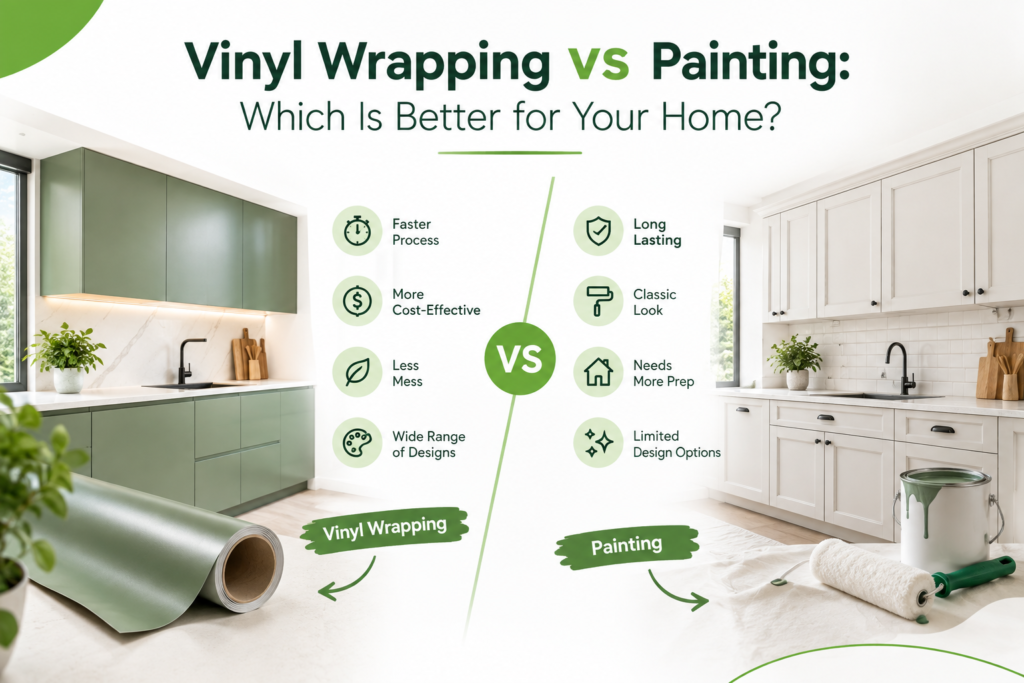
Vinyl Wrapping vs Painting: Which Is Better for Your Home?
Homeowners looking to refresh cabinets, doors , furniture, or exterior surfaces increasingly face a choice that used to be reserved for cars: vinyl wrap or paint? Both can completely transform how a surface looks, but they differ enormously in cost, durability, application process, and long-term maintenance. Choosing the wrong one for your project can mean redoing the work sooner than expected or spending more than necessary for a result that doesn’t quite fit your needs.
This guide breaks down exactly how vinyl wrapping and painting compare, so you can confidently choose the right option for your home.
What Is Vinyl Wrapping?
Vinyl wrapping involves applying a thin, adhesive-backed vinyl film over a surface cabinets, doors, countertops, furniture, or even exterior panels. The technique is borrowed from the automotive world, where vinyl wraps have long been used to change a car’s color or finish without the cost and mess of a full repaint. Applied to home surfaces, vinyl wrapping offers a fast, low-mess way to update color and texture, often in a fraction of the time a paint job would take.
What Is Painting?
Painting is the traditional method: applying liquid paint, usually over a primer and finished with a protective topcoat, directly onto a surface. It’s a well-understood, time-tested process with decades of product development behind it, from basic wall paint to specialty cabinet and furniture paints engineered for scuff and moisture resistance.
Vinyl Wrapping vs Painting: Side-by-Side Comparison
| Factor | Vinyl Wrapping | Painting |
|---|---|---|
| Upfront cost | Moderate to high (material + labor) | Lower for DIY, moderate for professional |
| Application time | Faster (hours to a day per surface) | Slower (multiple coats, drying/curing time) |
| Durability | Very durable short-term; edges can peel over years | Durable long-term with proper prep and sealing |
| Maintenance | Wipe clean; hard to spot-repair | Easy to touch up small areas |
| Color/finish options | Huge range, including wood grain and metallic textures | Unlimited custom colors, fewer texture effects |
| Reversibility | Easy to remove and change again | Requires stripping/sanding to change |
| Best for | Cabinets, doors, accent surfaces, quick updates | Walls, trim, whole-room or whole-house projects |
| Lifespan | 5–10 years typically | 7–15+ years with quality paint and prep |
| Moisture resistance | Excellent (great for kitchens/bathrooms) | Good, with moisture-resistant paint |
Pros and Cons of Vinyl Wrapping for Your HomePros:
- Fast application with minimal mess no fumes, no lengthy drying time between coats
- Wide variety of finishes, including realistic wood grain, brushed metal, and matte or gloss textures
- Excellent for covering minor surface imperfections on cabinet doors or furniture
- Easy to remove without damaging the underlying surface in most cases, making it ideal for renters
Pros and Cons of Painting for Your Home
Pros:
- Proven long-term durability, especially with quality primer and a protective topcoat
- Easy to touch up scratches or chips without redoing the whole surface
- Scales well to any surface size, from small trim pieces to entire rooms
- Lower material cost for large-scale DIY projects
Which Should You Choose? (By Use Case)
Kitchen cabinets: Kitchen Vinyl wrapping often wins here for speed and moisture resistance a strong option if you want a quick refresh without the mess of sanding and spraying inside a lived-in kitchen.
Walls and ceilings: Painting is almost always the better choice. Wrapping large, uneven wall surfaces is impractical and far more costly than a can of paint and a roller.
Furniture and accent pieces: Either works well, but vinyl offers more creative finish options, like wood grain or brushed metal, for a designer look without custom paint mixing or specialty techniques.
Exterior doors and trim: Painting typically holds up better against prolonged UV exposure and weather over many years, though specialty exterior-grade vinyl wraps exist for shorter-term refreshes.
Rental properties or frequent style changes: Vinyl wrapping is ideal since it’s removable and repositionable without damaging the original surface underneath, making it a favorite for landlords and renters alike.
Cost Comparison: Vinyl Wrap vs Paint
Home transformation doesn’t have to mean torn-up drywall, weeks of contractors, or a budget that spirals out of control. Wall wrapping has earned its place as one of the smartest alternatives to full renovation because it delivers the same visual payoff texture, color, dimension, personality without the permanence or the price tag of a remodel.
Whether you call it a vinyl wall wrap, a peel-and-stick wall covering, a 3D wall film, or a removable wall skin, the underlying idea is the same: a fast, flexible, design-forward way to reinvent a space. It’s especially well-suited for renters who can’t make permanent changes, homeowners who want to test a bold look before committing, and anyone who simply wants results without the renovation timeline.
If you’re on the fence about your next home update, wall wrapping is worth trying before you reach for a sledgehammer it’s low-risk, high-impact, and reversible if your taste changes down the line.
FAQs
Does vinyl wrap look as good as paint?
Modern vinyl wraps can closely mimic paint finishes, wood grain, and metallic effects, often indistinguishable at a glance, though close inspection near seams and edges can occasionally reveal the material.
Is vinyl wrapping cheaper than painting?
Not usually for large surfaces. Vinyl wrapping tends to cost more in materials but less in labor time, making it more cost-effective specifically for smaller, detailed surfaces like cabinet doors.
How long does vinyl wrap last compared to paint?
Vinyl wrap typically lasts 5 to 10 years, while a quality paint job can last 7 to 15-plus years depending on the surface, prep work, and environmental conditions.
Can you paint over vinyl wrap, or vice versa?
Painting over vinyl wrap is technically possible with proper prep but isn’t recommended for a lasting finish. Applying vinyl wrap over old paint is common and often preferred, as long as the painted surface is smooth, clean, and free of peeling.
Which is better for kitchen cabinets: vinyl wrap or paint?
Vinyl wrap is often preferred for kitchens due to faster application and strong moisture resistance, but a professionally sprayed cabinet paint job can offer comparable durability with the added benefit of easier spot repairs down the line.
Final Thoughts
There’s no universal winner between vinyl wrapping and painting the right choice depends on the surface, your timeline, budget, and how long you need the finish to last. For fast, moisture-resistant updates on cabinets and furniture, vinyl wrapping is hard to beat. For walls, large surfaces, and long-term durability across your whole home, painting remains the tried-and-true option worth the extra prep time.