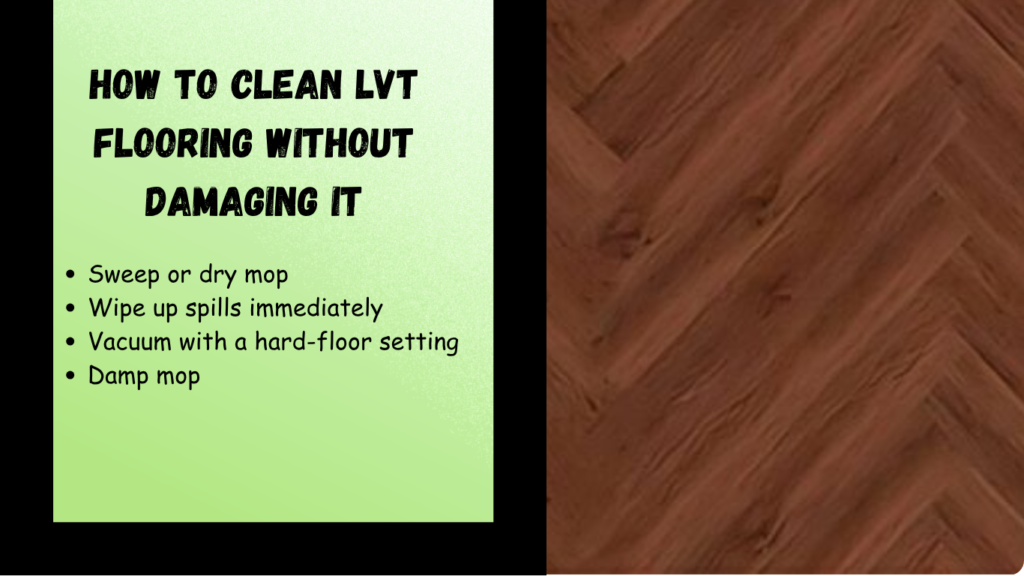
Luxury Vinyl Tile (LVT) is one of the most popular flooring choices today and for good reason. It’s durable, water-resistant, budget-friendly, and mimics the look of natural wood or stone without the maintenance headaches. But “low maintenance” doesn’t mean “no maintenance.” Using the wrong cleaning products or tools on LVT flooring can dull its finish, cause scratches, or even lift the planks over time.
In this guide, we’ll walk through exactly how to clean LVT flooring safely, the best LVT flooring maintenance routine to follow, and the common mistakes that quietly damage your floors even when you think you’re doing everything right.
Luxury Vinyl Tile is a multi-layer flooring product made from PVC vinyl, featuring a printed design layer topped with a protective wear layer. This wear layer is what gives LVT its scratch resistance and shine and it’s also the layer most at risk from harsh chemicals, abrasive tools, and excess water.
Improper cleaning doesn’t just affect appearance. Over time it can:
Getting your LVT flooring cleaning routine right from day one protects your investment and keeps floors looking new for years.
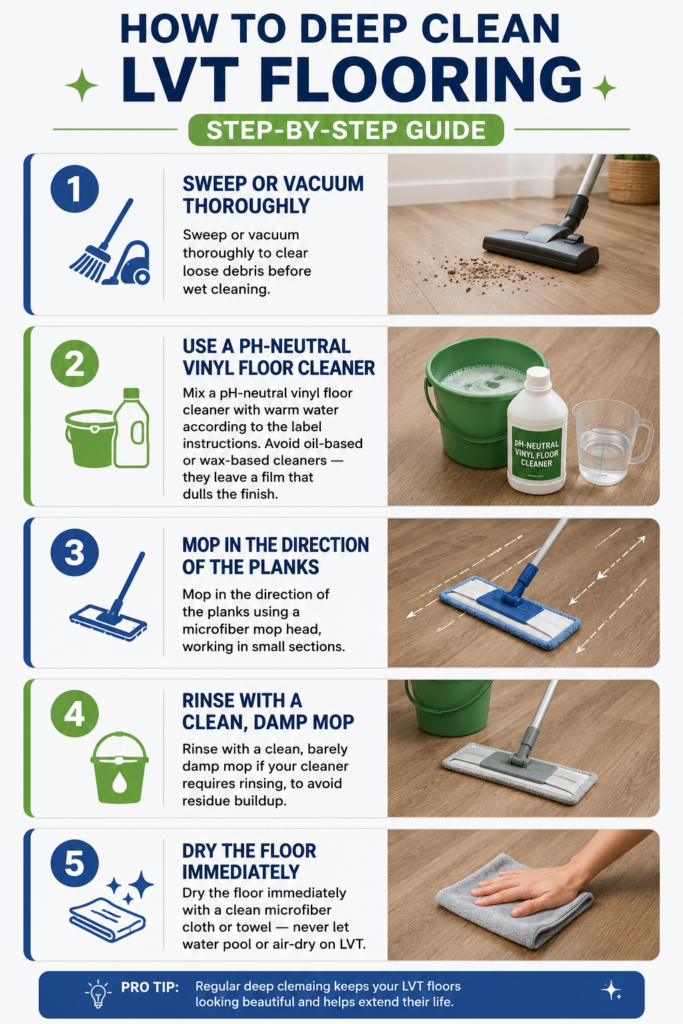
A consistent, light-touch routine prevents the need for aggressive deep cleaning later.
Daily Maintenance
Weekly Maintenance
Stain Type | Safe Removal Method |
Scuff marks | Rub gently with a tennis ball or a soft cloth dampened with a small amount of white vinegar solution |
Grease or oil | Blot (don’t rub) with a mild dish soap and warm water solution |
Ink or marker | Dab with isopropyl rubbing alcohol on a soft cloth, then wipe dry |
Dried food or gum | Soften with a bag of ice, then gently scrape with a plastic scraper (never metal) |
Always test any solution on a small, hidden area first.
This is where most damage actually happens. Avoid:
LVT flooring is designed to be durable and low-maintenance, but it still deserves the right care to stay looking its best. Stick to pH-neutral cleaners, microfiber tools, minimal water, and regular light maintenance , and avoid steam, wax, and abrasive tools altogether.
If your current flooring is already showing wear, scratches, or damage that cleaning alone can’t fix, it may be time for an upgrade. At Wrapstar, we help homes and businesses across the UAE find durable, stylish flooring and surface solutions that are easier to maintain and built to last.

Wrapstar is the best vinyl wrapping company based in Dubai, specializing in high-quality finishes for a wide range of surfaces, including furniture, kitchens, doors, and more. We provide durable, practical vinyl wrapping solutions for both residential and commercial projects.