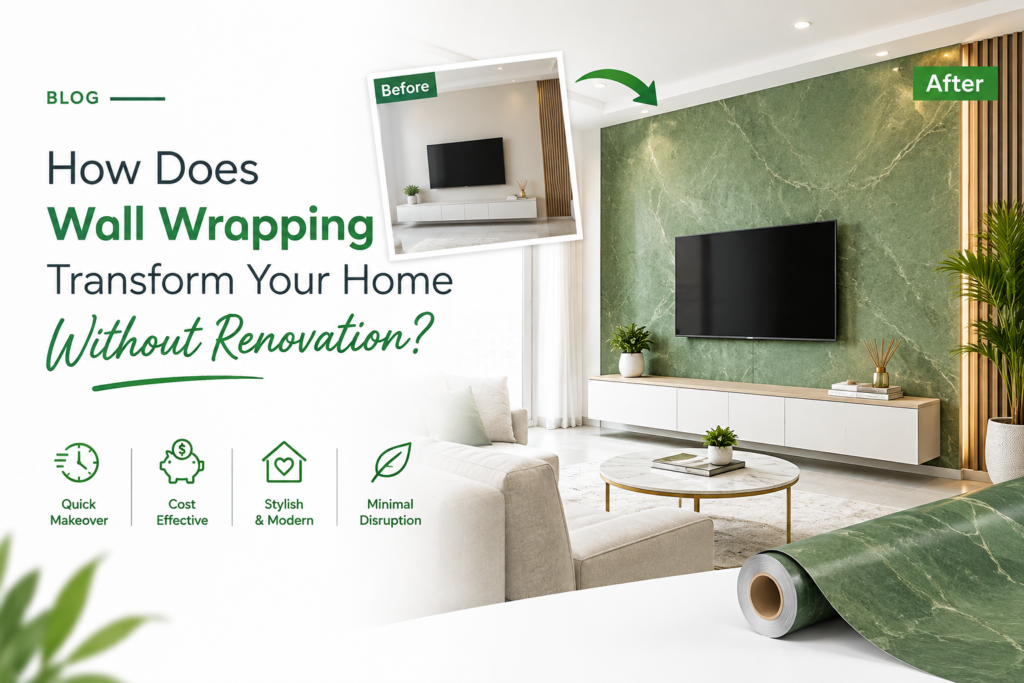
How Does Wall Wrapping Transform Your Home Without Renovation?
Renovating a home is exciting on paper new colors, new textures, a fresh feel. But in reality, it often means weeks of dust, contractors, noise, and a budget that spirals fast. That’s exactly why wall wrapping has become one of the most searched home-improvement trends of the year. It delivers the same “wow” factor as a full remodel, minus the mess, the labor, and the wait.
If you’ve come across terms like vinyl wall wrap, peel-and-stick wall covering, self-adhesive wallpaper, 3D wall wrap film, or removable wall vinyl and wondered whether they’re all the same thing you’re in the right place. This guide breaks down what wall wrapping actually is, how it compares to traditional renovation, and how to use it to redesign any room in a weekend.
What Is Wall Wrapping? (And Why Everyone's Talking About It)
Wall wrapping is the process of applying a thin, adhesive-backed vinyl or film often called a wall wrap, wall skin, or wall vinyl covering directly over an existing wall surface. Think of it the same way vehicle wraps transform a car’s exterior without repainting it. The same logic applies to interiors: instead of stripping down to bare drywall, sanding, priming, and repainting, you simply “wrap” the wall in a new finish.
Popular alternative names you’ll see used across the industry include:
- Wall vinyl wrap
- Peel-and-stick wall film
- Self-adhesive wall covering
- Removable wallpaper wrap
- 3D textured wall wrap
- Decorative wall skin
- Architectural wall film
Different brands and blogs use different terminology, but they’re all describing the same core concept a surface-level transformation applied over your existing wall, not a structural change.
Wall Wrapping vs. Traditional Renovation: The Real Comparison
| Factor | Wall Wrapping | Traditional Renovation |
|---|---|---|
| Time to complete | A few hours to 1–2 days | Days to several weeks |
| Mess & dust | Minimal to none | Significant (drywall dust, paint fumes) |
| Cost | Budget-friendly per sq. ft. | Higher (labor, materials, permits) |
| Reversibility | Fully removable, damage-free | Permanent |
| Skill required | DIY-friendly | Usually requires contractors |
| Design options | Textures, 3D patterns, faux finishes, murals | Paint, tile, wallpaper (traditional install) |
Key Benefits of Wall Wrapping for Your Home
1. Instant Transformation, Minimal Downtime
Most wall wrap installations can be finished in a single afternoon. There’s no waiting for paint to cure or plaster to dry.
2. Budget-Friendly Alternative to Remodeling
Compared to structural renovation, wall film and vinyl wrap materials cost significantly less per square foot and you save on labor if you DIY it.
3. Endless Design Variety
From faux marble and concrete textures to 3D geometric wall panels, brick-effect wraps, and matte or metallic finishes, wall wraps mimic high-end materials at a fraction of the price.
4. Renter-Friendly and Reversible
Because most wall wraps are removable and residue-free, they’re ideal for renters, temporary spaces, or anyone who likes to redesign often without committing permanently.
5. Low Maintenance
Many wall wrap materials are moisture-resistant, scratch-resistant, and easy to wipe clean a practical upgrade for kitchens wraps, bathrooms wrapping, and high-traffic hallways.
6. Covers Imperfections
Cracks, uneven texture, or old wallpaper glue residue? A quality wall wrap can conceal minor surface flaws without the need for costly wall repair first.
Best Rooms and Use Cases for Wall Wrapping
- Accent walls – living rooms, bedrooms, entryways
- Kitchen backsplashes – heat and moisture-resistant wraps
- Bathroom walls – waterproof vinyl finishes
- Home offices — textured or acoustic wall films
- Rental apartments – fully removable, deposit-safe options
- Commercial-to-residential crossover spaces – home studios, converted garages, basements
How to Choose the Right Wall Wrap
- Check the surface type — smooth drywall, textured plaster, and concrete each need different adhesive grades.
- Pick the finish — matte, gloss, textured, or 3D embossed, depending on the mood you want.
- Consider room humidity — bathrooms and kitchens need moisture-resistant or waterproof wall vinyl.
- Decide: DIY or professional install — larger or patterned wraps often benefit from a professional installer for seamless alignment.
- Think long-term vs. short-term — permanent adhesive vinyl lasts longer; removable film suits renters or frequent redecorator
Is Wall Wrapping Worth It?
If your goal is to refresh a space quickly, affordably, and without the chaos of a full renovation, wall wrapping checks every box. It’s not a replacement for structural repairs or major layout changes but for anyone wanting a bold visual upgrade with minimal disruption, it’s one of the smartest home-design shortcuts available today.
Final Thoughts
Home transformation doesn’t have to mean torn-up drywall, weeks of contractors, or a budget that spirals out of control. Wall wrapping has earned its place as one of the smartest alternatives to full renovation because it delivers the same visual payoff texture, color, dimension, personality without the permanence or the price tag of a remodel.
Whether you call it a vinyl wall wrap, a peel-and-stick wall covering, a 3D wall film, or a removable wall skin, the underlying idea is the same: a fast, flexible, design-forward way to reinvent a space. It’s especially well-suited for renters who can’t make permanent changes, homeowners who want to test a bold look before committing, and anyone who simply wants results without the renovation timeline.
If you’re on the fence about your next home update, wall wrapping is worth trying before you reach for a sledgehammer it’s low-risk, high-impact, and reversible if your taste changes down the line.